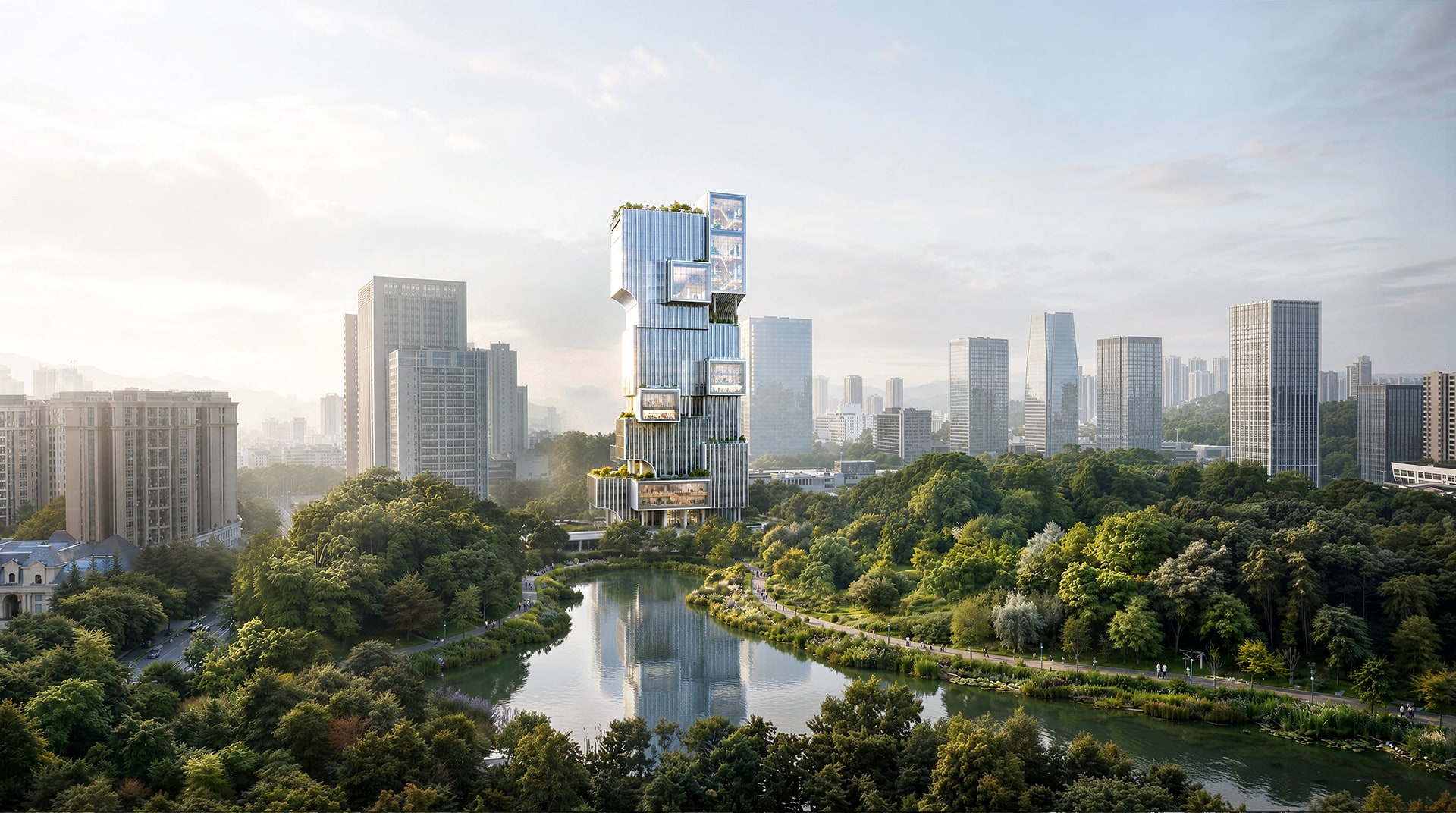
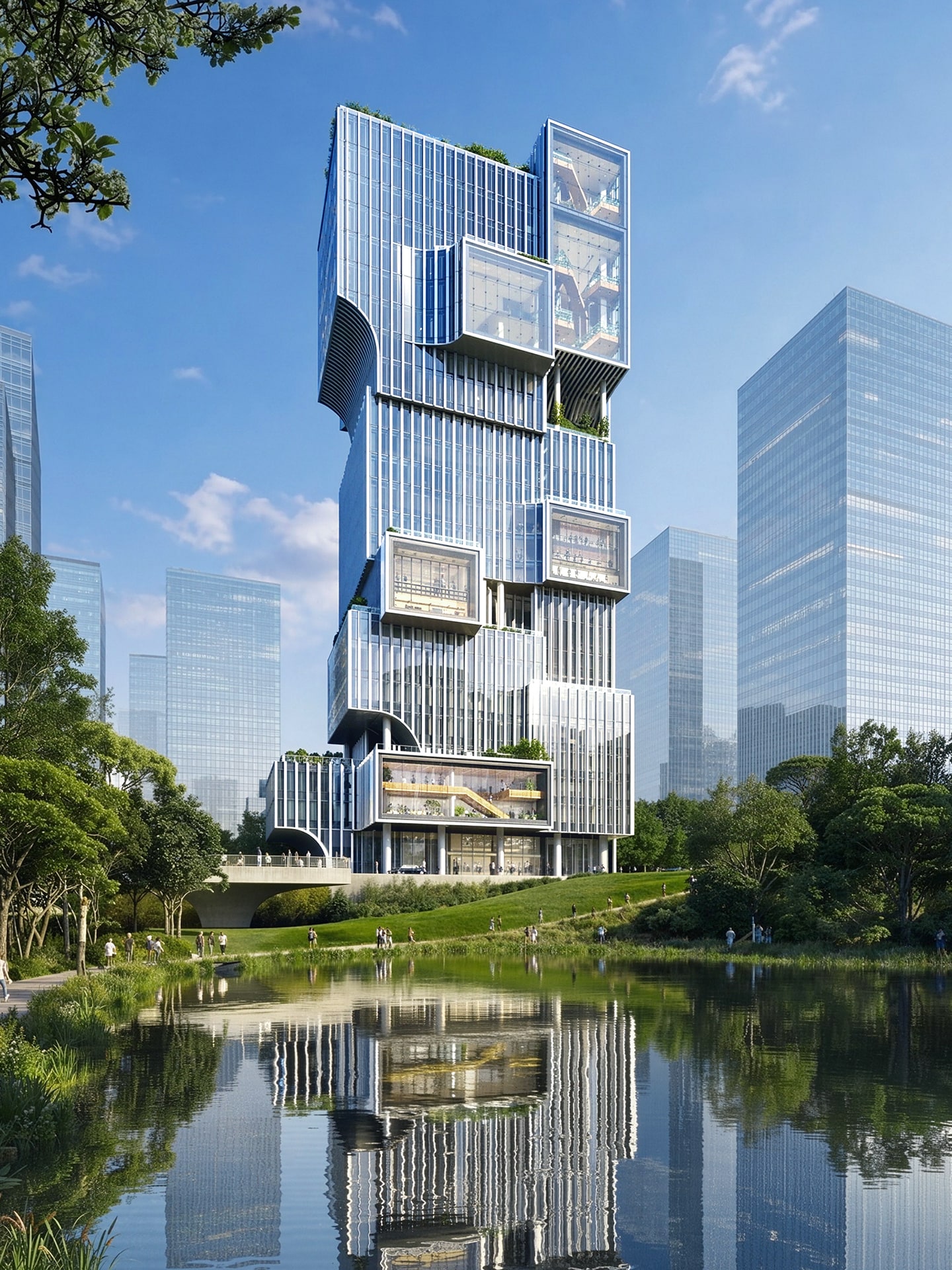
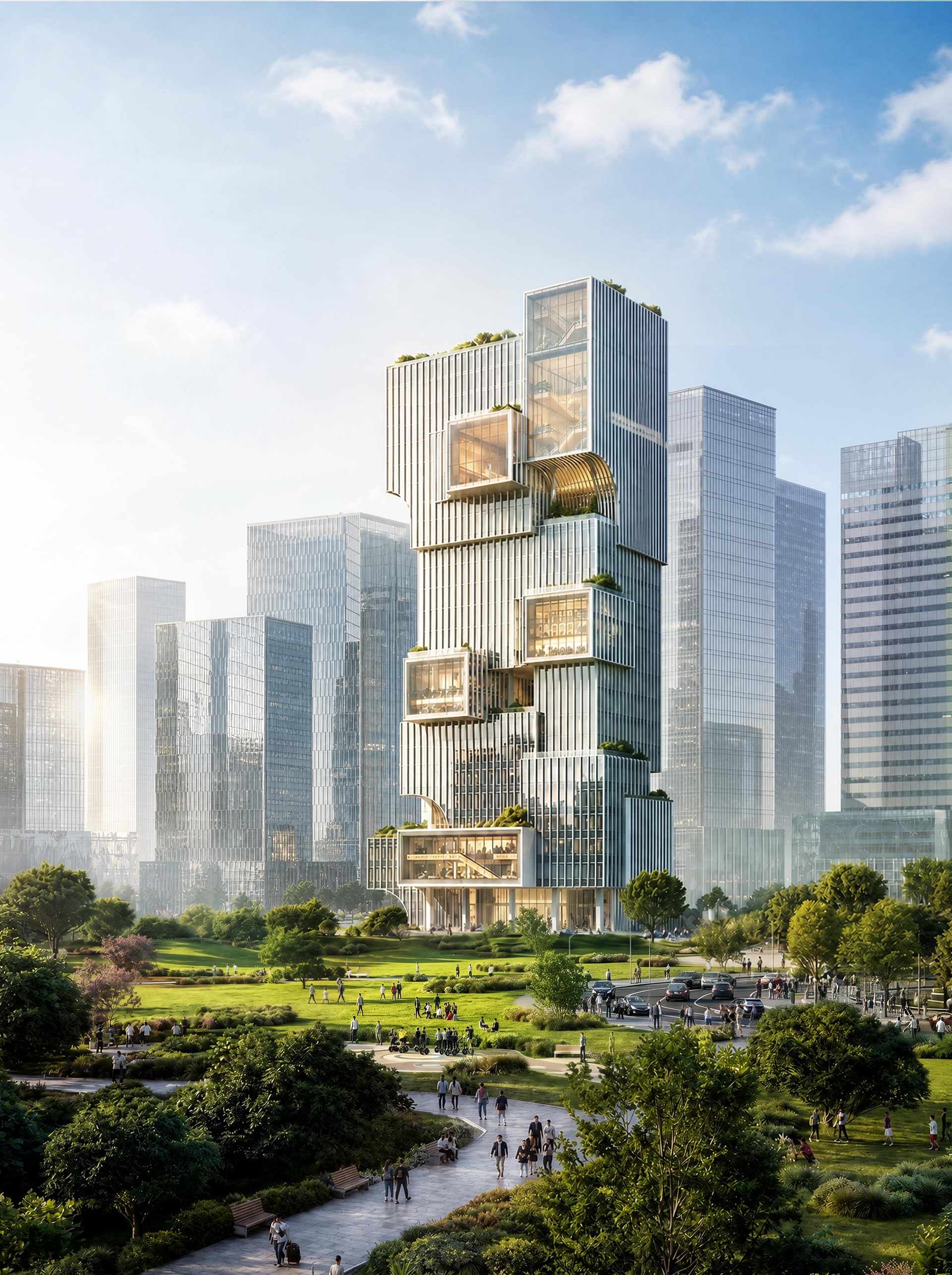
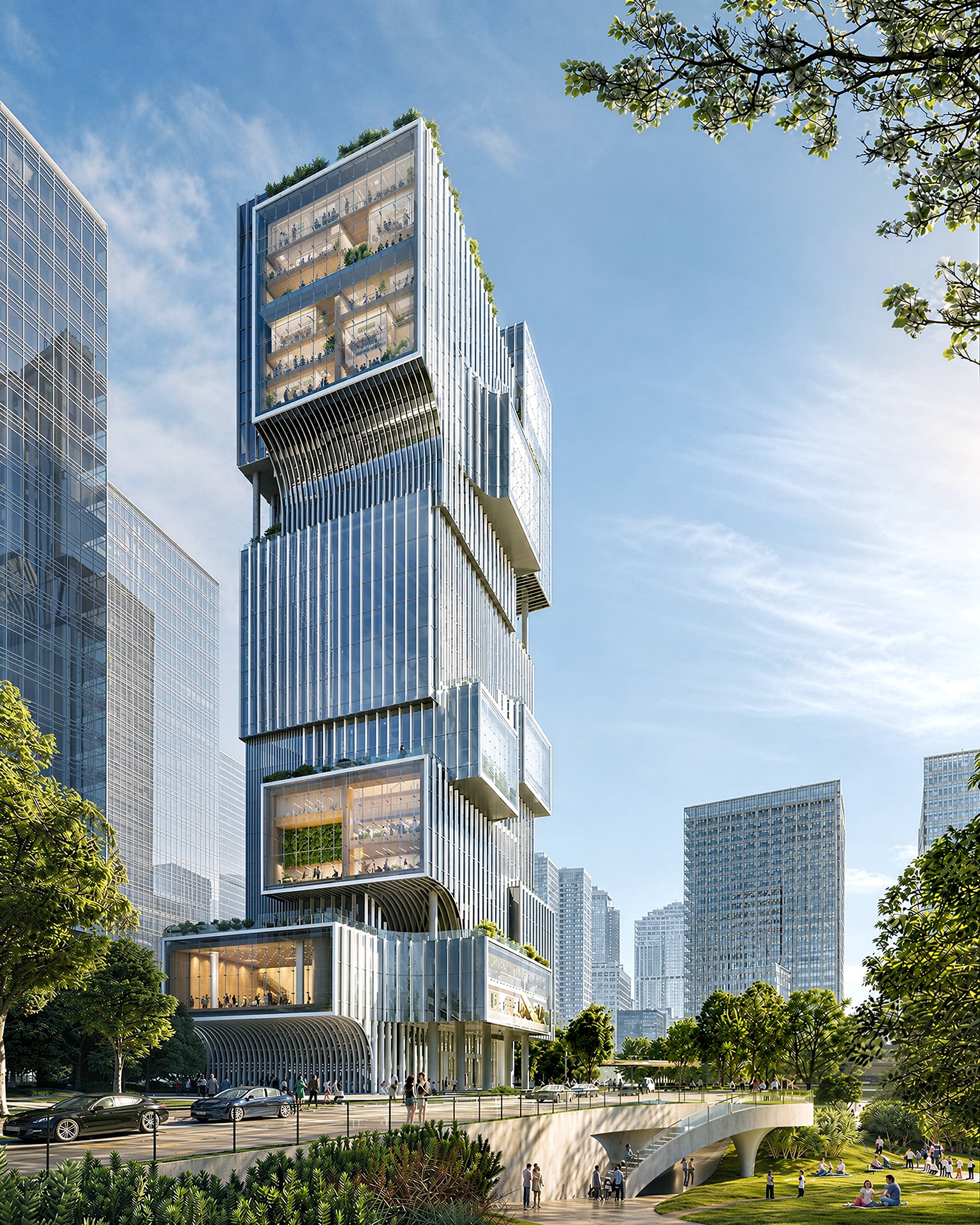
Ole Scheeren © Buro-OS
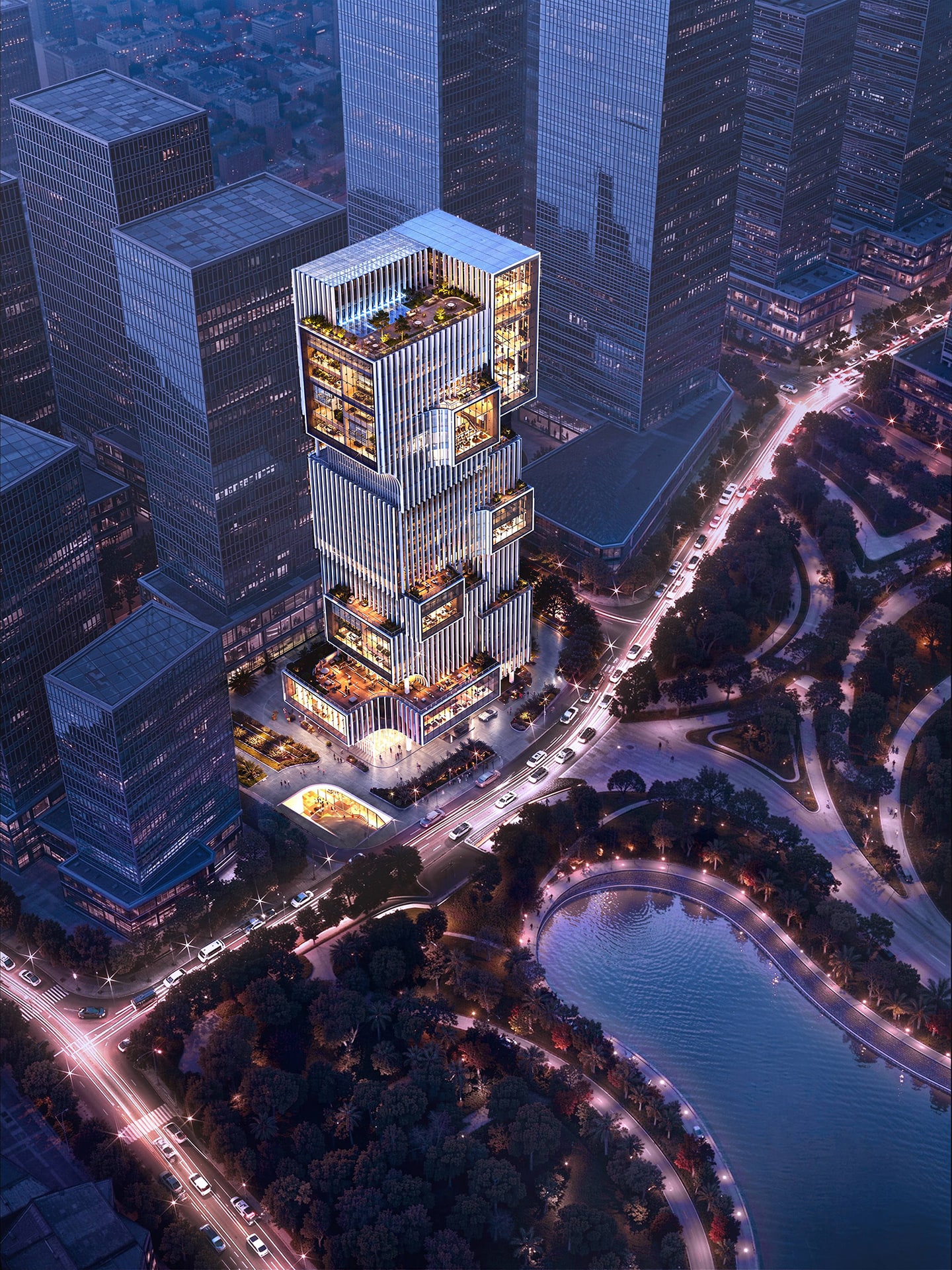
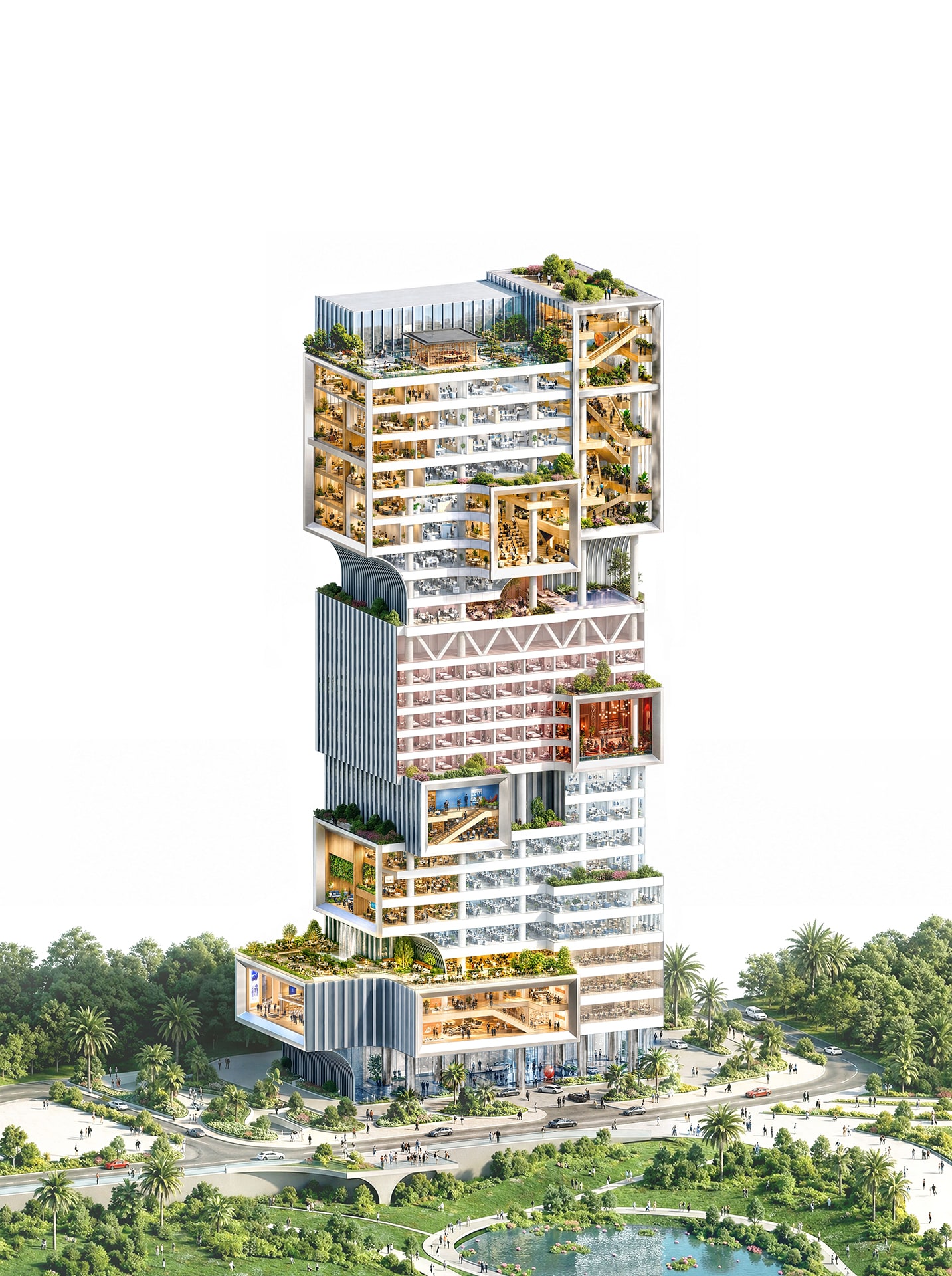
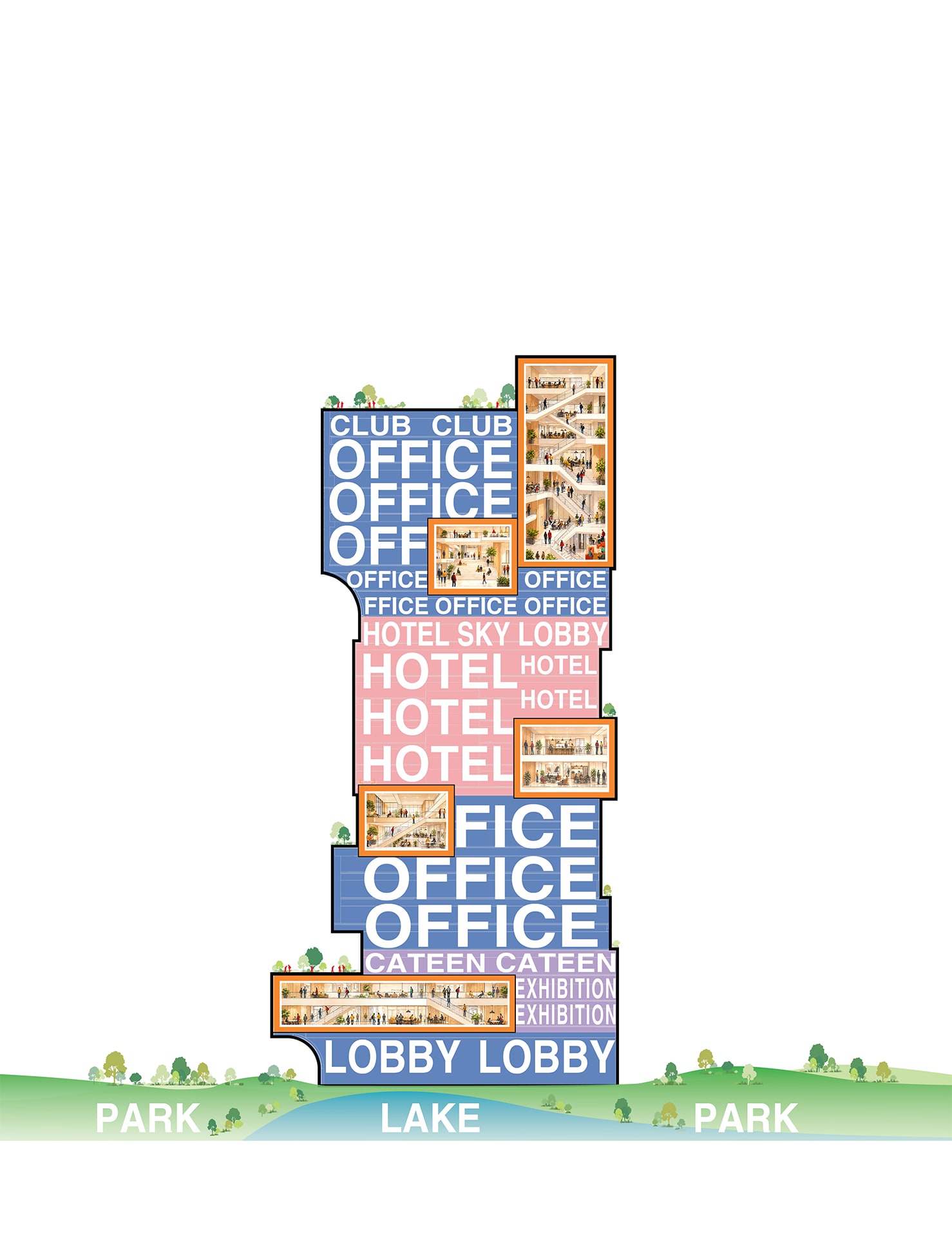
Currently under construction, KDL Portal will serve as the new global headquarters for KeDaLi Industries (KDL), a leading manufacturer of structural components for high-performance batteries and a pioneer in the robotics industry. Conceived as a compact vertical campus, the tower integrates offices, R&D labs, short-stay apartments, a lecture hall and a corporate gallery within a single, precisely organised structure defined by a series of collective Portal Spaces.
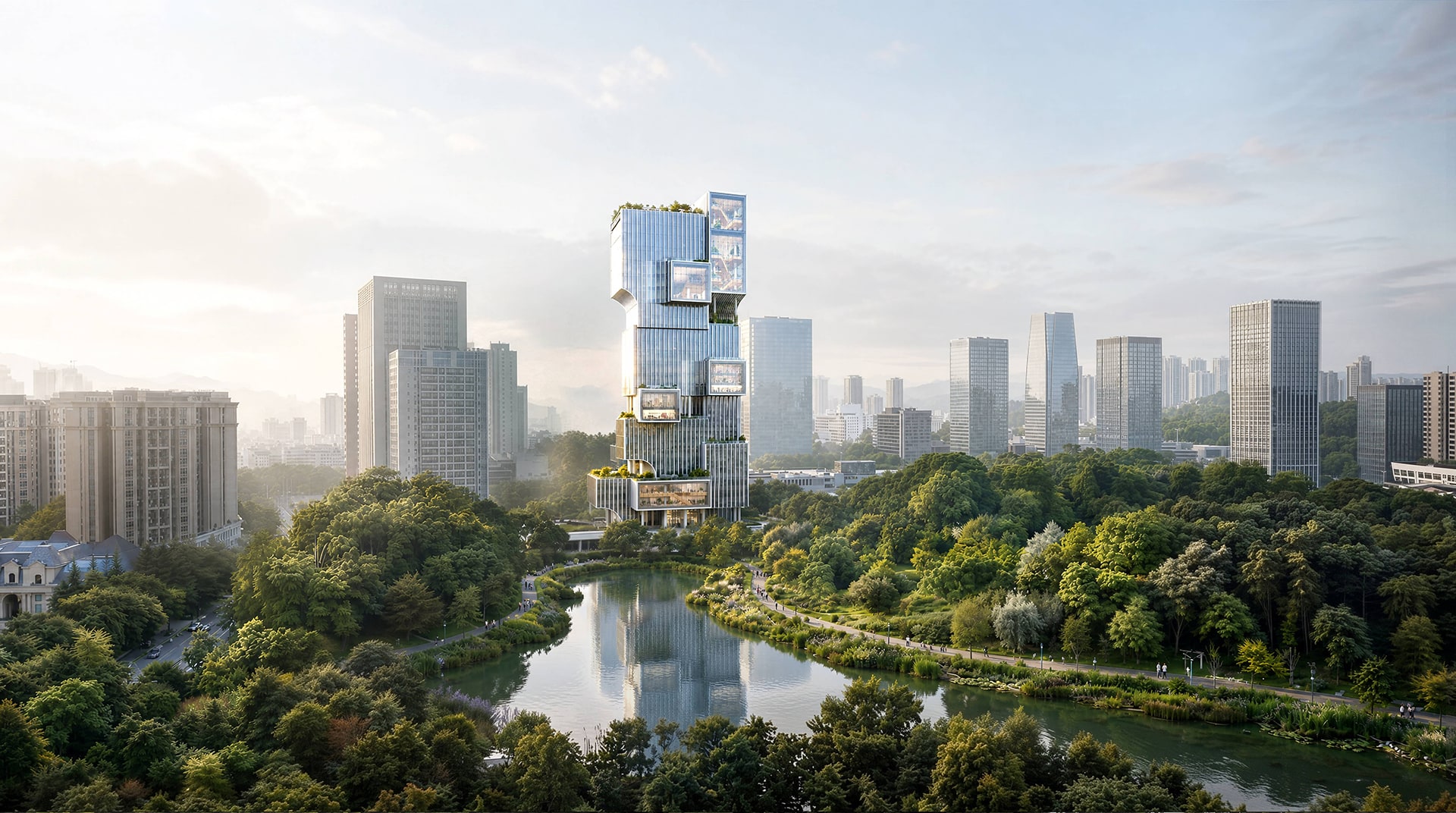
Located on the edge of a scenic reservoir park in Shenzhen’s Longhua district, KDL Portal occupies a prominent site within one of the city’s emerging business clusters. As one of Longhua’s first high-profile headquarters, it establishes a distinct architectural identity for both the company and the district. KDL Portal marks Longhua’s transformation into a nature-integrated hub for innovative manufacturing companies in China’s Greater Bay Area.
Founded in 1996, KDL has been a critical yet largely unseen force in the global battery supply chain, advancing electrification and new energy technologies. “The development of KDL reflects the trajectory of China’s industrial growth. We began with a small studio, established our manufacturing bases, and later entered the global market through the development of production facilities in Europe and North America,” said KDL Chairman Li Jianli. “This year marks KDL’s 30th anniversary, and our global headquarters will embody the precision, reliability, and continuous innovation that define KDL’s approach to highly integrated manufacturing. Ole Scheeren’s design captures these values with remarkable clarity.”
Rather than a conventional office tower, KDL Portal is conceived as an innovation hub that consolidates the company’s diverse functions into a interconnected environment of offices, research and development facilities, a corporate gallery, a business club and short-stay apartments.
“China is no longer the world’s sweatshop – it has become a powerful engine of research, innovation and advanced manufacturing,” says Ole Scheeren. “KDL is emblematic of this shift: a company that has operated for years as a largely invisible ‘hidden champion’ within global supply chains, is now choosing to manifest its identity through a headquarters building that gives its ambition a visible architectural presence – a vertical ecosystem where R&D, production intelligence and everyday life are brought together as part of an integrated urban experience.”
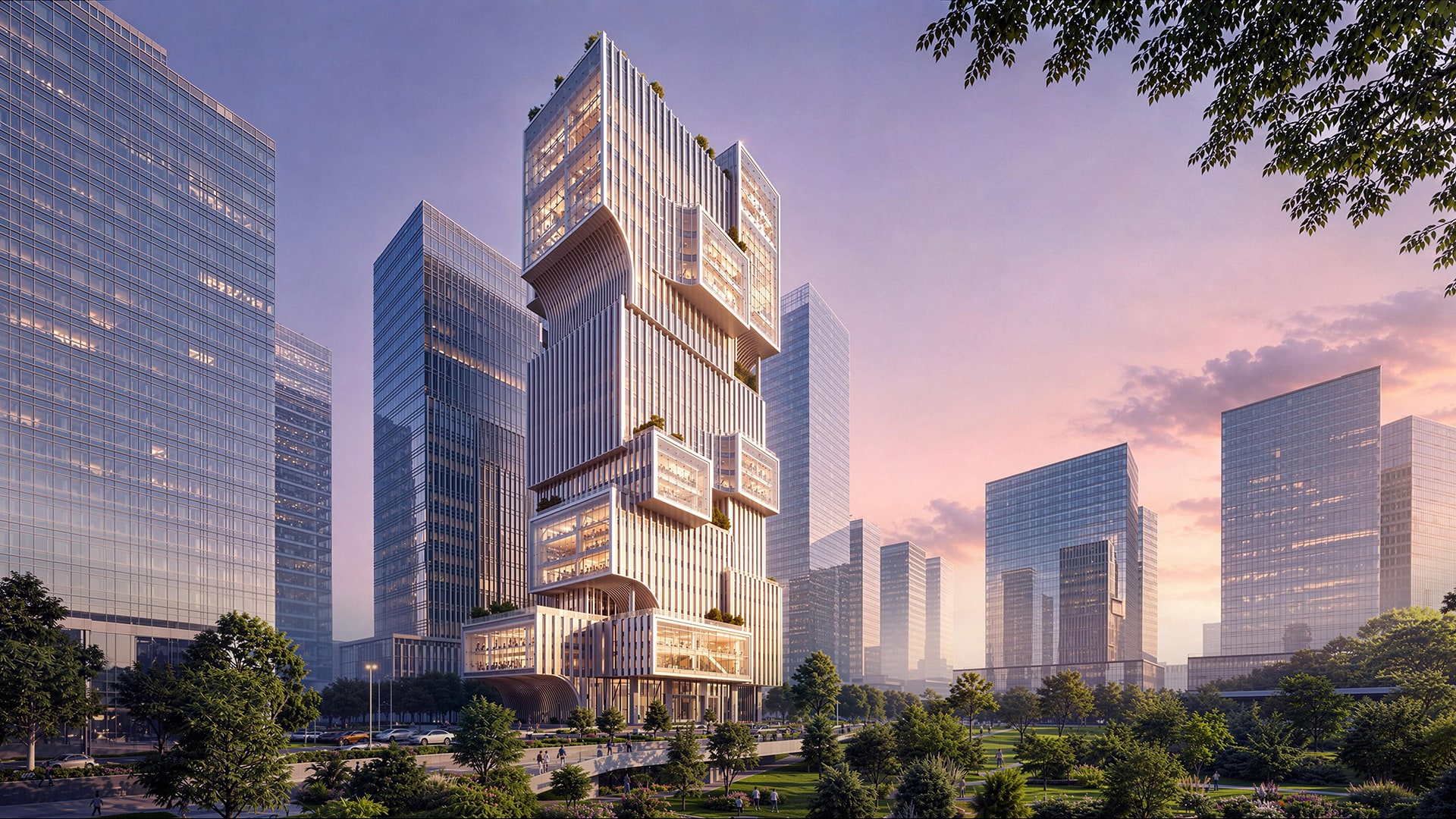
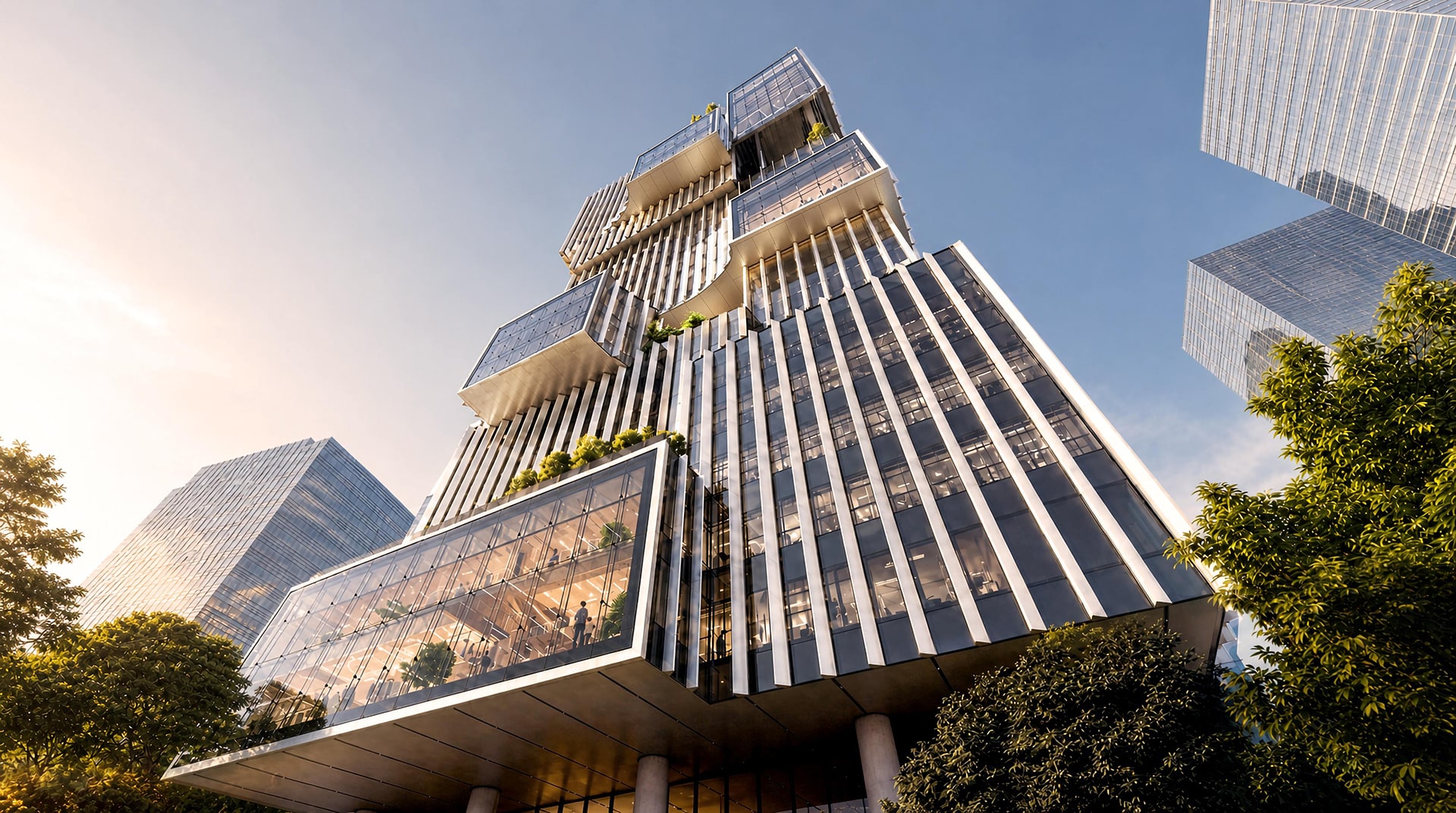
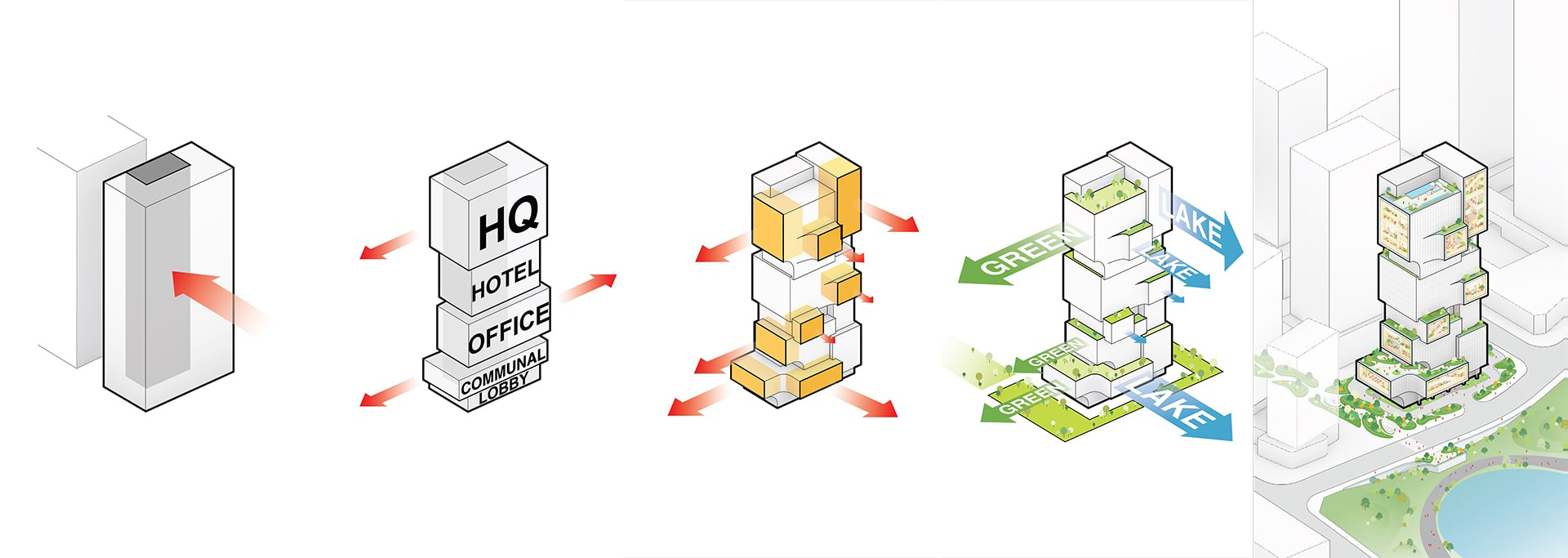
Rising 120 metres and comprising 36,380 sqm, the tower is organised as a series of stacked and shifting programmatic volumes. These volumes are articulated by a collection of large, curvilinear Portals projecting outward to the city and reservoir park. Acting as visual connectors between nature and architecture, they transform the façade into an inhabited Interface and choreograph the building's relationship to its surroundings, framing panoramic views while giving the headquarters a strong sculptural presence on the Longhua skyline.
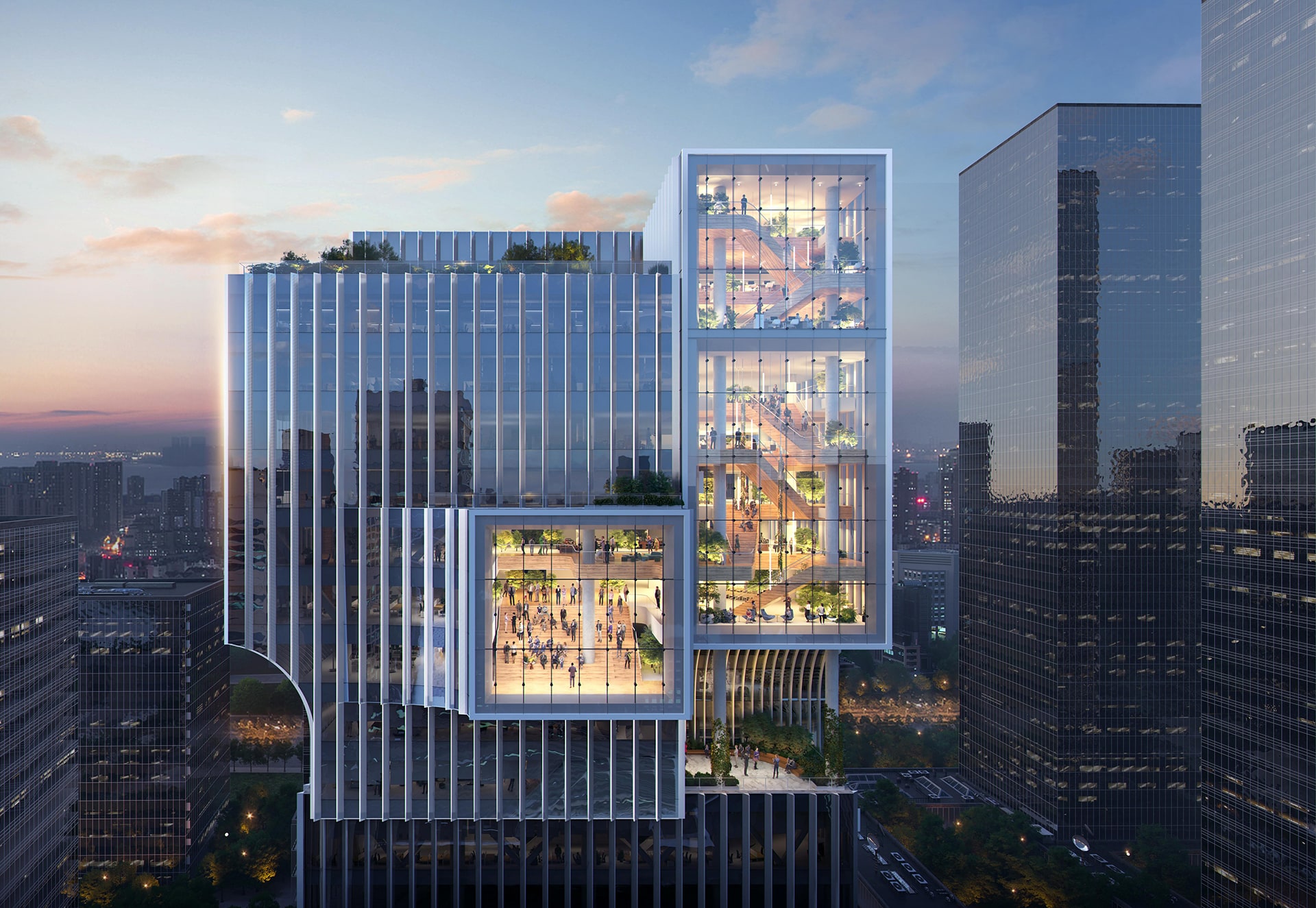
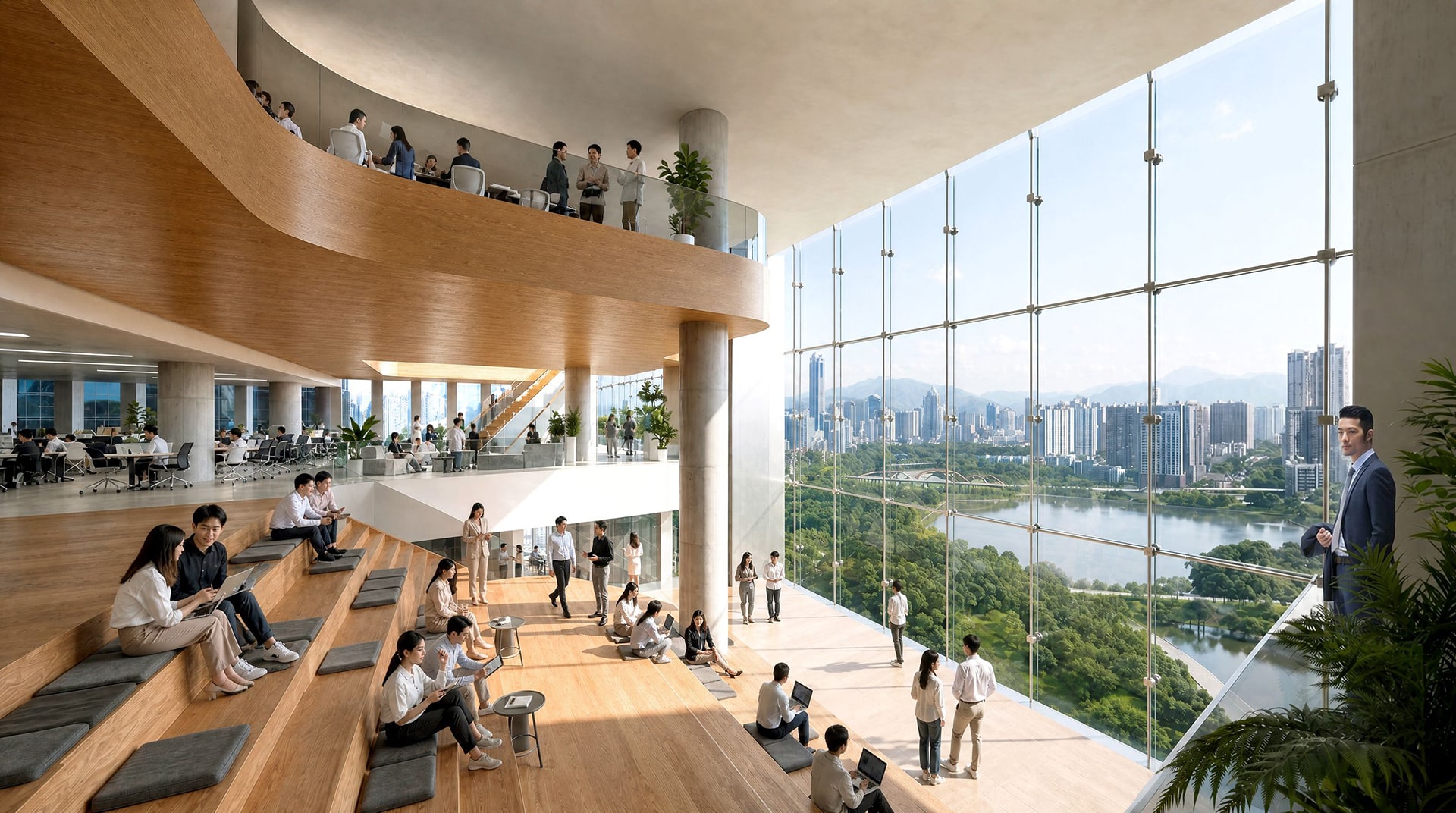
Internally, the Portals form collective spaces that extend the standard floorplate to provide alternative workplaces, exchange zones and leisure spaces. Volumetrically, they also generate a sequence of open and semi-covered terraces, linking it to the surrounding landscape.
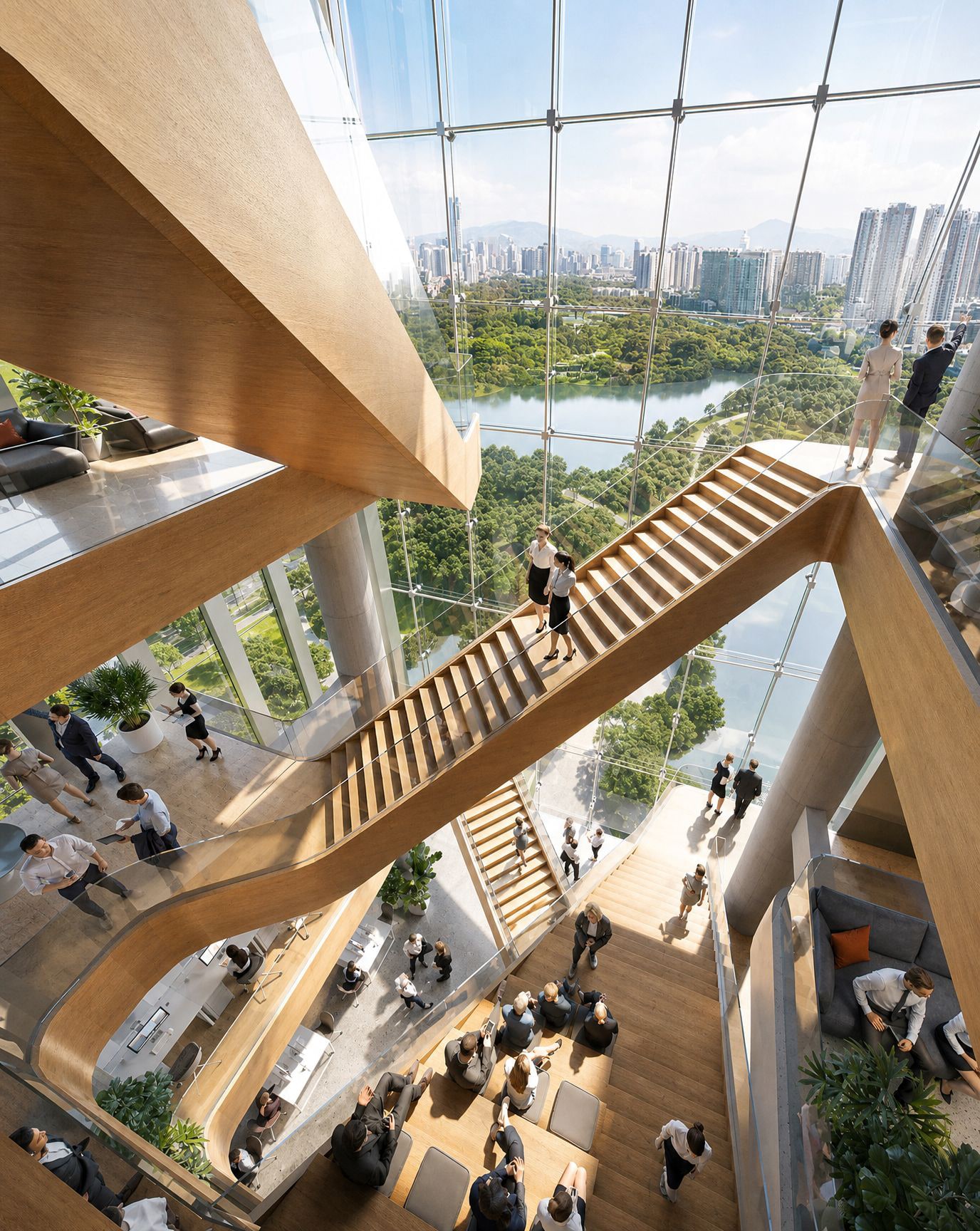
The Portals’ spatial variation is defined by their respective orientation. Those facing the plaza to the south incorporate inhabitable volumes for collaborative work, informal meetings and workshops. The ones overlooking the lake are activated by staggered staircases that connect multiple levels and platforms for interaction, talks, gatherings and everyday encounters. By drawing circulation and social spaces into the façade, Ole Scheeren’s design activates the building’s appearance, encouraging visible movement and visual connection across floors.
Landscaped terraces, internal greenery and generous daylight and views create an ideal environment for productive work and collaboration for KDL’s staff, researchers and international guests and partners.
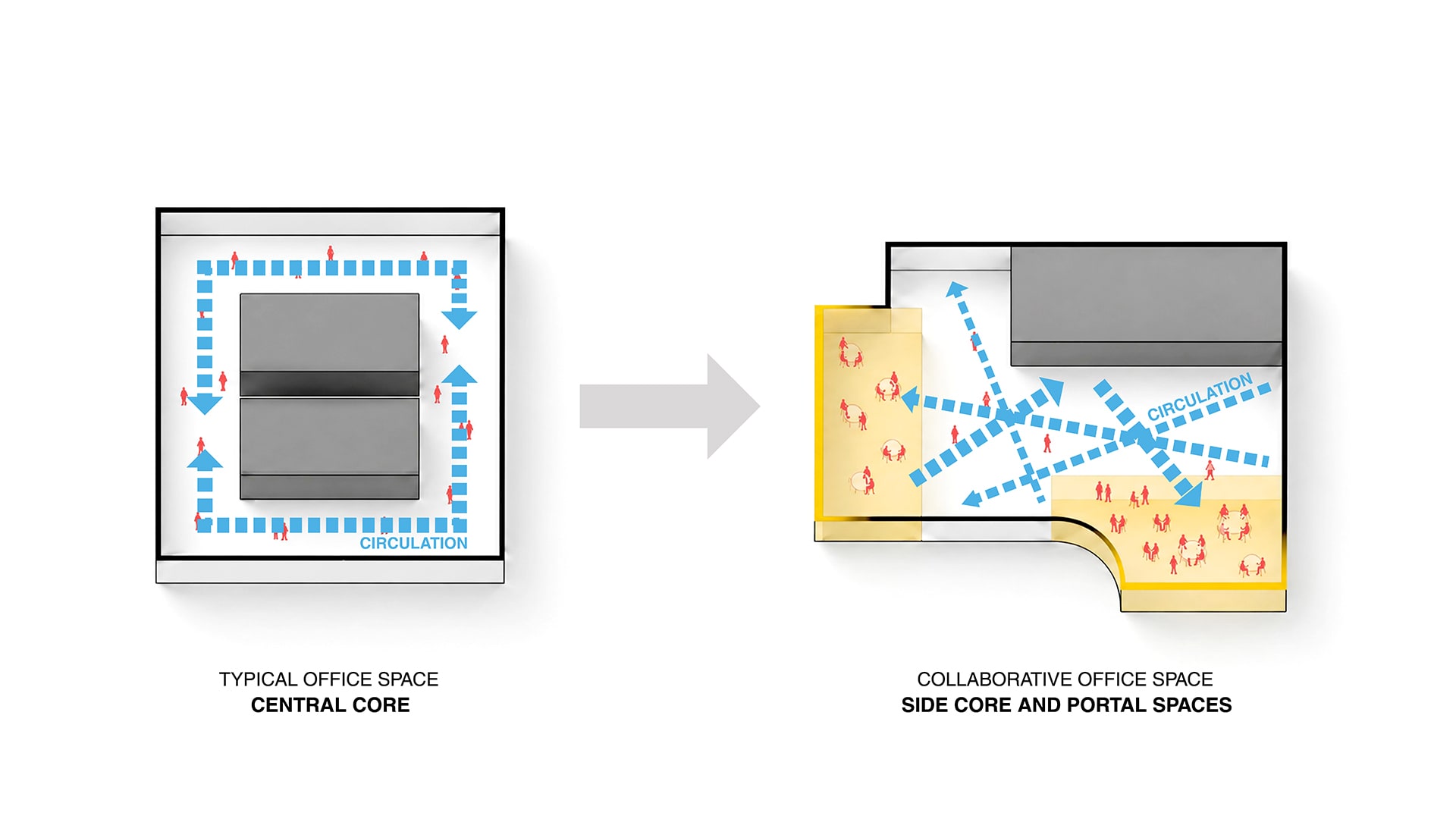
This spatial strategy underpins the headquarters’ departure from the conventional central core tower typology. By shifting services and vertical circulation to one side, the design frees large, flexible floorplates with open access to the Portal Spaces, daylight and expansive views through a highly transparent glass façade. The result is a flexible and efficient floor plate that can adapt to evolving needs over time.
“Rather than a closed, singular object, KDL Portal forms a highly integrated system of workspaces, circulation and shared environments,” adds Ole Scheeren. “It is an architecture measured not only in terms of function and efficiency, but also by openness, encounter and collective experience – an approach shaped by years of working within one of the world’s rapidly evolving cities and by a commitment to technical prowess and performance.”
Scheduled for completion in 2027, KDL Portal is set to establish a strong architectural presence for one of the electrical industry's strategically important global players.